Recovery for Runners
Table of Contents
Training and recovery are equally important. They are not opposites. They are not one versus the other. They are the two parts that make up getting better. You cannot absorb training without recovery. That is the whole deal.
I see it all the time. Someone crushes a marathon or finishes a big block and immediately starts talking about the next one. That is the biggest mistake. You cannot bulldoze your way through recovery and expect to keep improving. When you skip it, you are not stacking fitness. You are stacking fatigue. And eventually that catches up with you in the form of worse workouts, injury, or just straight up not wanting to run anymore. That last one might be the biggest risk of all. When you lose the enjoyment, it is the quickest way to become a pickleball player.
Tier One: Sleep, Food, Hydration
Sleep is literally a superpower
There is nothing you can do that is one percent as good as sleep. Not a massage gun, not compression boots, not any supplement on the market. Sleep is where your hormones reset, where you synthesize protein, where your nervous system processes everything you put it through. It is the equivalent of doping. It is that impressive and that helpful.
Sleep is not a bonus. It is not something you get around to if you happen to have the time. It has to be nearly as important as the run itself. You have to shift your mindset there. Set an alarm for when you go to sleep, not just when you wake up. Cool the room down. Get blackout curtains. Invest in a good bed, good pillows, good blankets. Your body loves consistency. Give it a schedule it can rely on and it will reward you for it.
Food is recovery
Eat real food. That is most of it right there.
I have never seen an athlete dramatically improve because they hit their exact protein window. I have seen plenty improve from just adding more whole foods. Color on the plate. Beans and legumes, there are so many studies on what those do for recovery. Quality carbs, good pasta, nice bread. Throw some organic blueberries in your oatmeal. Swap the protein bar for a smoothie with some fresh fruit. Add broccoli somewhere in your day. Where can you build the habit?
The reason whole foods matter so much comes down to how nutrients actually work. Every nutrient has corresponding nutrients that help you absorb and use it. Vitamin C helps you absorb iron, which is why people recommend taking iron with orange juice. But that is true of everything. You cannot just isolate one mineral and expect magic. Potassium from a supplement is not the same as potassium from a banana, because the banana comes with all the micronutrients that help your body actually use it. That is why whole foods will always beat a pill.
A few extras worth mentioning. Magnesium before bed can help with relaxation and it is something a lot of people are short on. Tart cherry juice has real studies behind it for recovery and sleep. Beets and beet powder have a lot of nitric oxide, which opens up your blood vessels and helps your body move blood at a higher level. Pretty powerful stuff. And creatine has some interesting science around recovery too, worth playing around with.
Biggest thing you can do on the supplement side though is get your blood work done. If you have a deficiency in something like iron or vitamin D and you do not know about it, fixing that can completely change how you feel and recover. Get tested. Work with a doctor. Do not just start randomly taking things.
Tier Two: Movement Is Medicine
After a hard session or a race, rest is okay. But then later on you want some gentle movement. Not a workout. Movement.
Movement heals. When you go to physical therapy they do not tell you to lie on the couch. They give you the right level of movement to promote healing. Same principle applies here. Walking, easy cycling, yoga, pool walking, a short easy run sometimes. Low load, light movement. Powerful.
The reason comes down to your lymphatic system. Lymphatic fluid cannot always move itself. It depends on muscle contractions to pump it through the body. When blood moves it brings oxygen and nutrients to repair muscle. The lymph system clears the waste products out. That is the whole cycle. Nutrients in, garbage out, as Kelly Starrett puts it. You help that process with movement.
Pool walking specifically is one of my favorite things to recommend and something I still do myself. The hydrostatic pressure from being in water compresses your body evenly, helps circulation, pushes fluid around, reduces swelling. The deeper you go the more pressure and the more evenly it works. Even a short pool session can make your legs feel brand new. I had a coach earlier in my career who required pool walking once or twice a week and it is one of the best things I took from that experience.
Leg elevation might be the highest return on investment thing on this entire list. Legs up on the wall, three to five times a day, five to ten minutes each time. Pump your ankles, squeeze your quads a little. You are moving lymphatic fluid, moving blood, letting everything drain back toward your heart. It will greatly reduce achiness, swelling, soreness. It helps with injury recovery. It is a cheat code and it is completely free.
Stack that with some compression sleeves or boots and you are getting even more out of it. That is bonus points on top of something already working.
Recovery Tools I Actually Use
None of this replaces sleep or food. These are one percenters. But one percenters add up, especially when you start stacking them.
Massage gun with a heated head attachment. I use mine almost every day. When you have a knot or a really tight spot it is incredibly good at breaking that up, getting blood moving into that area, fighting off the stiffness and achiness that builds up in a training block.
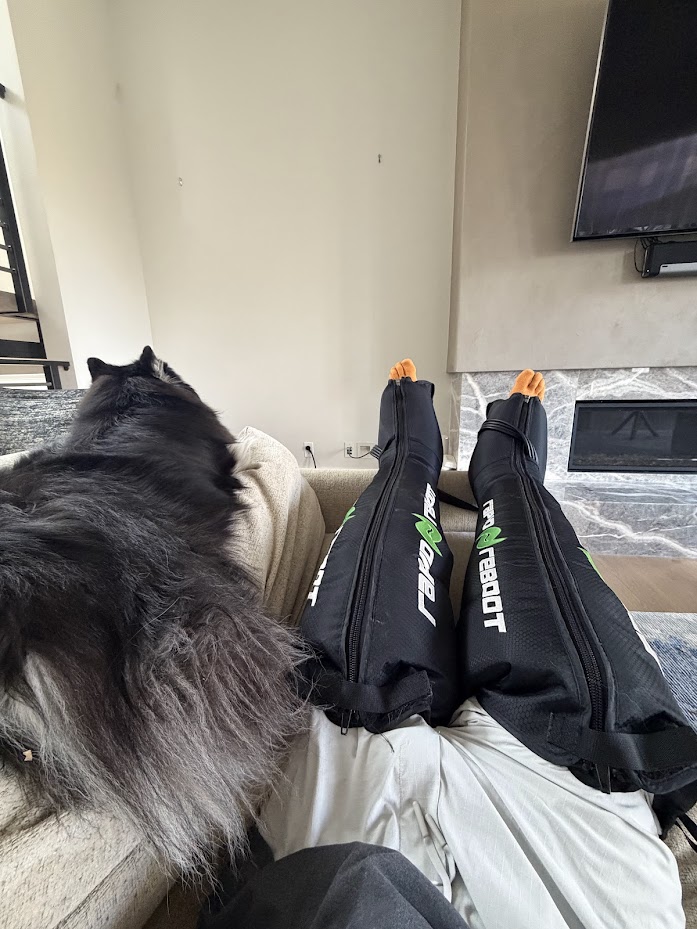
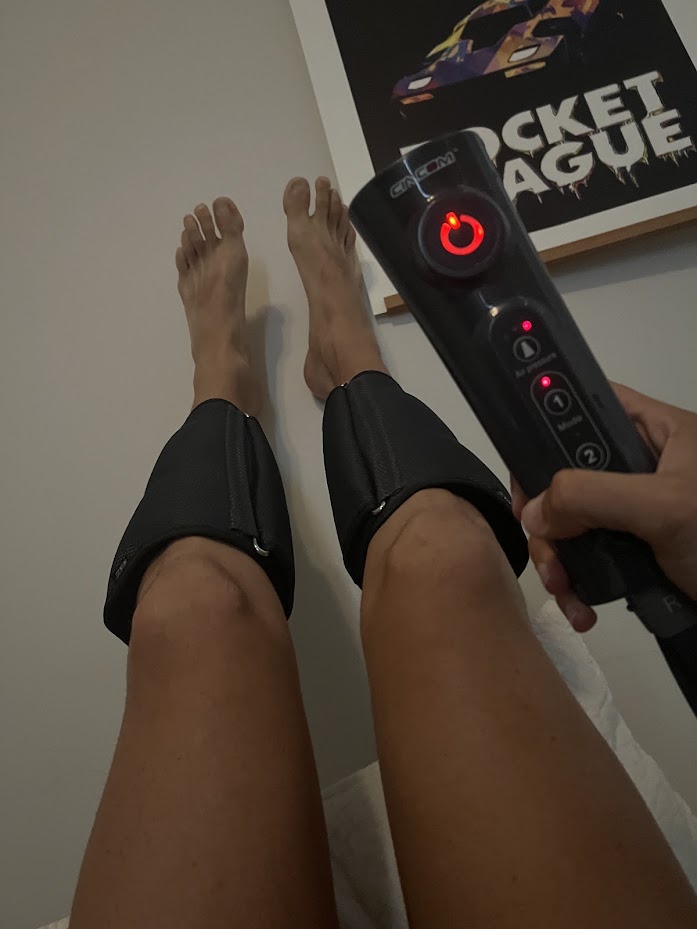
Compression boots. There are a lot of options. NormaTec is the gold standard but there are solid ones on Amazon with heated functions too. Combine them with leg elevation and you are getting a lot of blood flow movement at once. Throw some muscle cream on top of that and you can really bounce back for tough sessions.
Muscle creams. Lactigo, PR Lotion, KT Tape makes their own version now. There are studies showing they help fight lactic acid buildup. Marginal gains, but they stack. Especially useful if you have a problem area, like tweaky hamstrings. Pair a cream with a compression sleeve on that spot and you are getting a lot more out of it.
Roll Recovery R8. Brutal but effective for getting specific knots. Worth having around.
OOFOS slides. Walking around the house after long runs in good slides matters more than people think.
Sauna or hot tub. Great for relaxing and for getting out of that constant go-go-go headspace that marathon training can put you in.
You can do most of this stuff watching TV. It does not have to be complicated. The key is that you actually do it.
What Is Overrated
Counting everything. I have known so many people freaking out about exact grams of protein or hitting specific windows. I have almost never seen that make a meaningful difference compared to just eating more whole foods and not stressing about it. The anxiety of tracking every bite is worse for recovery than whatever you are eating.
Ice baths. They can help with soreness but inflammation is not the enemy. It is part of the healing process. It is how your body sends in the cleanup crew. You do not want to artificially shut that down all the time. You want your body to get good at managing inflammation on its own. Chronic inflammation is the problem. You solve that with sleep, movement, and food.
Lactate meters. I find them pretty goofy honestly. Fun if you are doing lab testing. Not something 99 percent of runners need to think about.
How Do You Know When You Need More Recovery
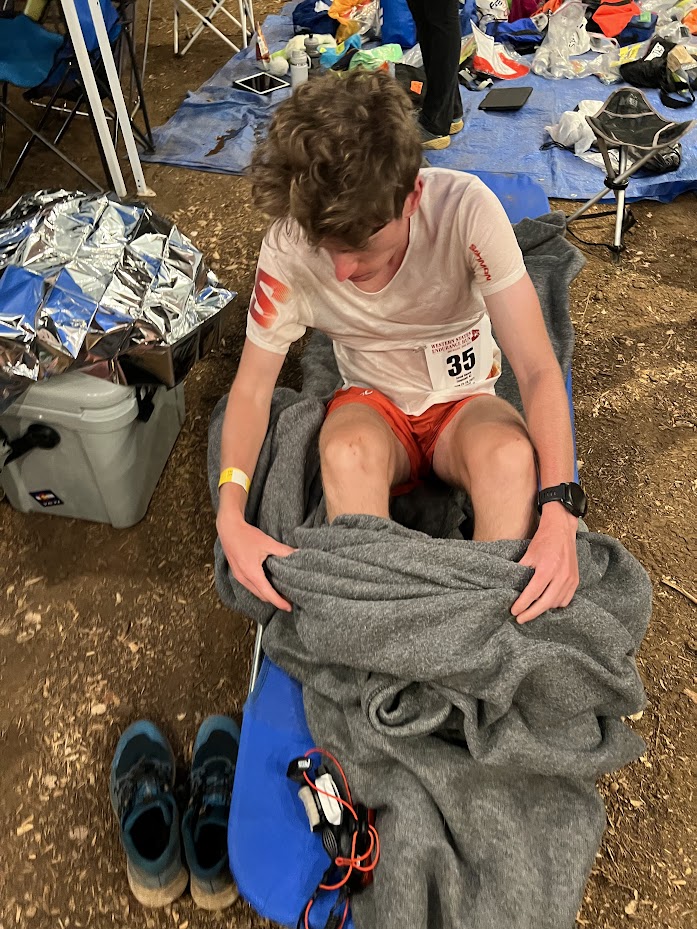
Mostly experience. After doing this long enough you start to feel the difference between hard training and digging a hole. When every workout gets worse and worse and you are not getting fitter, when you are working incredibly hard and it is not getting easier or more challenging in the right way, you are probably burying yourself.
The mental side is the thing to protect most. If you go out there convinced you are miserable and your mind is in the gutter it makes everything harder. And vice versa. When you have belief and excitement behind your training block it genuinely changes things. You have to protect that. When you feel like you are not stoked on running anymore that is a real signal.
When that happens, get out of workouts for a bit. Go shoot some hoops. Get on the bike. Go to what I call an executive workout. You go to the gym, you hop in the sauna, you get in the hot tub, you grab a smoothie if your gym makes them. You do all the fun nice things without the work. Or you go for a walk. Watch a ball game. I have been so cooked from running before that I just worked an extra hour instead because I actually enjoy my job. You do what fills you back up.
We are built to heal. We are basically Wolverine. Our bodies will do this on their own. We just have to give them a fighting chance sometimes. Leave a little meat on the bone. Keep training easy and manageable enough so that you are actually ready when things get exciting again.
After a Marathon or Half Marathon Specifically
For a marathon, we are taking four to fourteen days off from running. For a half, two to seven days. No running. The first thing you do is eat and sleep. Celebrate the fact that you just did something like that.
The biggest mistake, especially when the race does not go how you wanted, is trying to force the next one. Bulldozing recovery to get to the next block. You carry all that residual fatigue in and the training load builds without that reset and you really limit what you can do. You might get injured. You might run even slower. Or you just start to hate the training and that is the hardest thing to come back from.
After a marathon you are not really in training mode anymore. That is actually a good time to do some things you do not normally do inside a block. Play basketball. Play pickleball. Lift a little more. It is a big mental shift and that shift is part of the recovery.
How long you need depends on the person, how the block went, how the mileage impacted you, whether you were barely getting through or whether you had a lot left in the tank. Someone who did not overtrain and feels genuinely great after a race might slowly incorporate things back sooner. Someone who was redlining every other week needs a bigger reset. You have to know yourself.