Shin Splints Guide (Medial Tibial Stress Syndrome)
Table of Contents
First, an important clarification, because “shin splints” is a genuinely confusing term. There are two types. One is pain on the outside/front of the shin. The other is pain on the INSIDE of the shin, usually about 3 to 4 inches above the ankle. They are very different injuries with different causes and different fixes. This guide is about the inside one, what the medical world calls Medial Tibial Stress Syndrome. If your pain is on the inside of your shin, keep reading.
Here’s my list. This is exactly what I tell friends and athletes when they message me about it. And unfortunately, I know this injury better than almost any other, because I’ve had the worst version of it myself.
What We’re Actually Talking About
The medical name is Medial Tibial Stress Syndrome, and the word “syndrome” is doing a lot of work there. It’s the blanket term for when you’re having stress and pain in that spot. Here’s the thing nobody tells you: without an MRI, we don’t actually know what’s going on in there. It could be a tiny bit of irritation. It could be a small stress reaction. It could be on its way to becoming a stress fracture. Even an X-ray won’t show the intricacies of an actual stress fracture, and it’s really hard to diagnose by feel, even if you’re familiar with it.
Generally, pretty early on, it’s just some pain and discomfort and it’s usually not a fracture yet. But that spectrum, from irritation to reaction to fracture, is exactly why you take this seriously the moment it shows up.
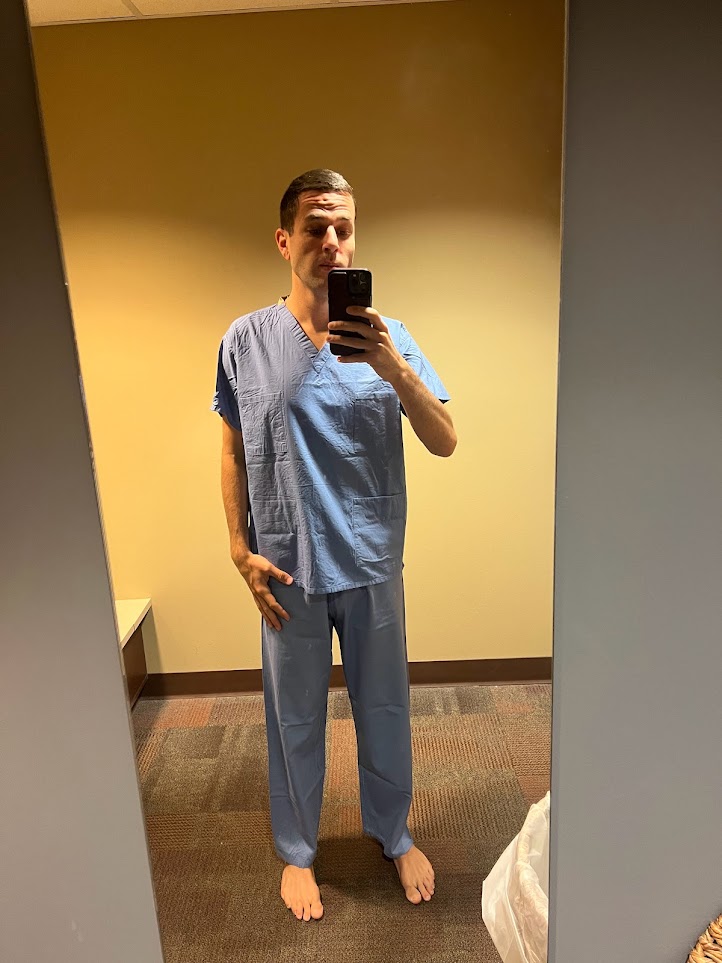
My Story With This Injury
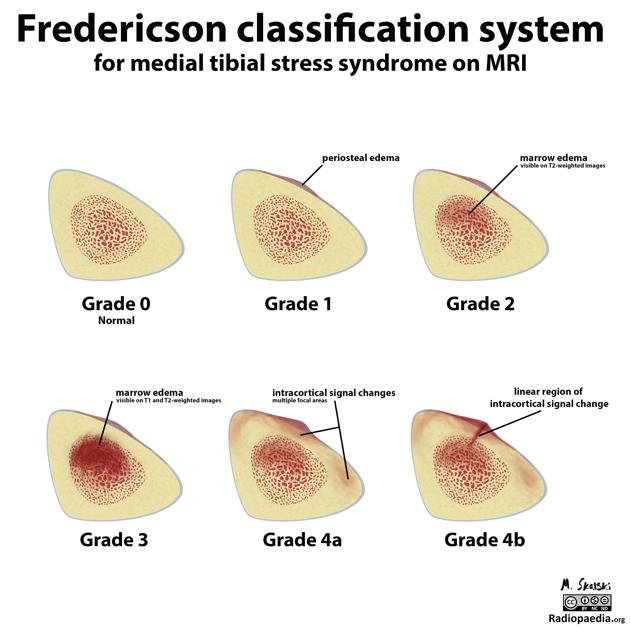
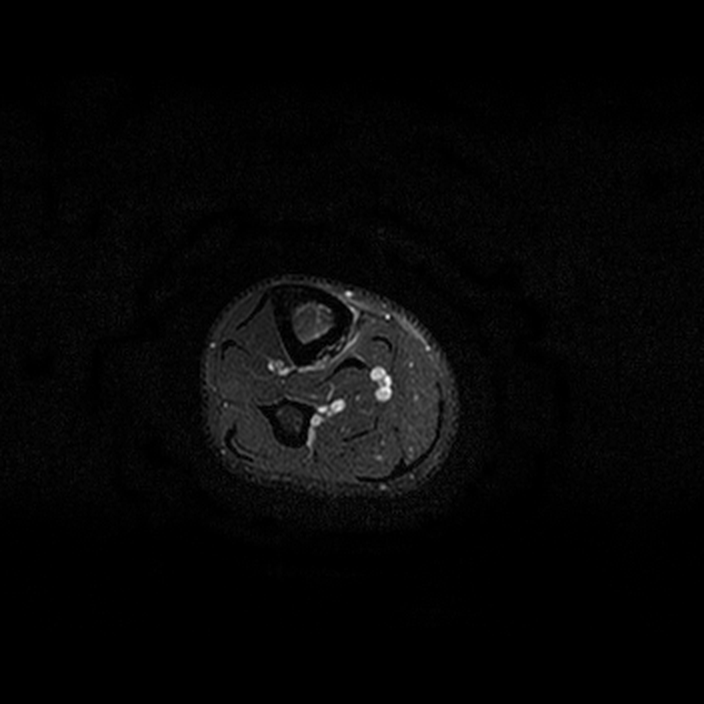
A few years back I had a grade 4a tibial stress injury on the medial side of my distal tibia. That’s the highest grade before an actual fracture line shows up on MRI. Marrow edema, periosteal edema, and signal inside the cortex of the bone itself, which is doctor speak for the bone was in real trouble. A huge factor in mine was a severe forefoot varus on my right side (the side of the injury), meaning my big toe literally floats off the ground. That structural imbalance caused a ton of issues for me. I ended up seeing Dr. Kevin Kirby in Sacramento, who made me custom insoles specifically built to correct it, and those insoles changed my life. He has tons of great info on his Facebook page.
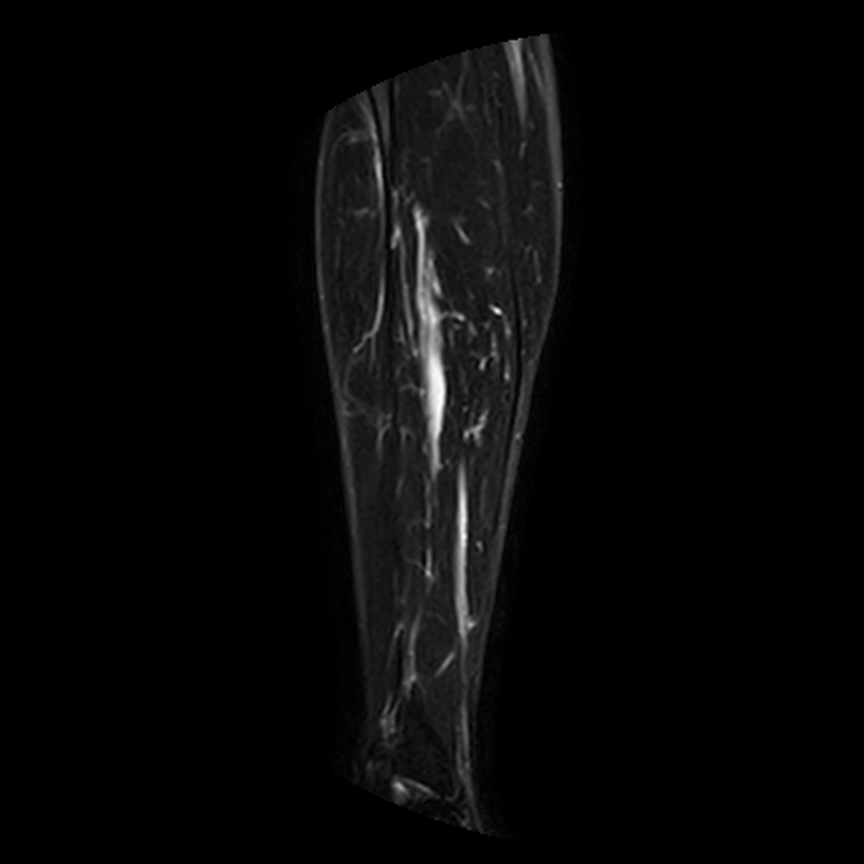
One of the more frustrating parts for me: I still had a lot of pain and swelling even once the bone had healed up completely. I went back and got another MRI, everything was healed, but it would still swell 6 to 8 months after the initial injury. I was told that’s normal, and I don’t have any problems now. I’m telling you this so you don’t panic when lingering soreness outlasts the actual healing. It usually does.
That whole experience is why I care so much about this injury, and why I’m confident the stuff below actually works.
Now on to the things you need to do/buy to get this thing moving.
1. Reduce Volume and Cross Train
This is the hard one, so we’re doing it first. MTSS is generally some form of overuse. And here’s the tricky part: it might not even be that you’re doing too much. If you’re unstable (weak feet, collapsing arches, or a structural imbalance like the forefoot varus I have, where the big toe floats off the ground), every mile you run gets compounded. Your volume is effectively higher than the number on your watch.
So you’re going to have to take a bunch of steps back. Drop your on-land running volume way down and switch to cross training. Getting in the pool will work wonders. Cycling works too. Then, while the volume is down, get in the strength work below, and slowly, and I mean super slowly, build the running back up.
One important note: it doesn’t have to be 100% pain-free. That can be really hard to achieve with MTSS and chasing total pain-free status will drive you insane. What you’re looking for is pain that’s low, stable, and not getting worse day over day. If it’s climbing, back off more.
2. Start with Shoes
Two things matter here: comfort, and stability so you feel like you’re not rolling as much on the inside. My go-tos:
- Brooks Adrenaline GTS, incredible at exactly this, similar feel to the Ghost but with more medial stability
- Asics Gel-Kayano, another proven medial support workhorse
- Hoka Bondi 9, does an awesome job, tons of cushion under a stable base
Go to a run specialty shop, try several pairs on, and pick whatever gives your inside shin relief. There’s no single correct answer.
3. Insoles
If I could only recommend two things for this injury, it would be a Mobo Board and good insoles. A lot of people end up with MTSS because of an imbalance, and insoles are how you address it.
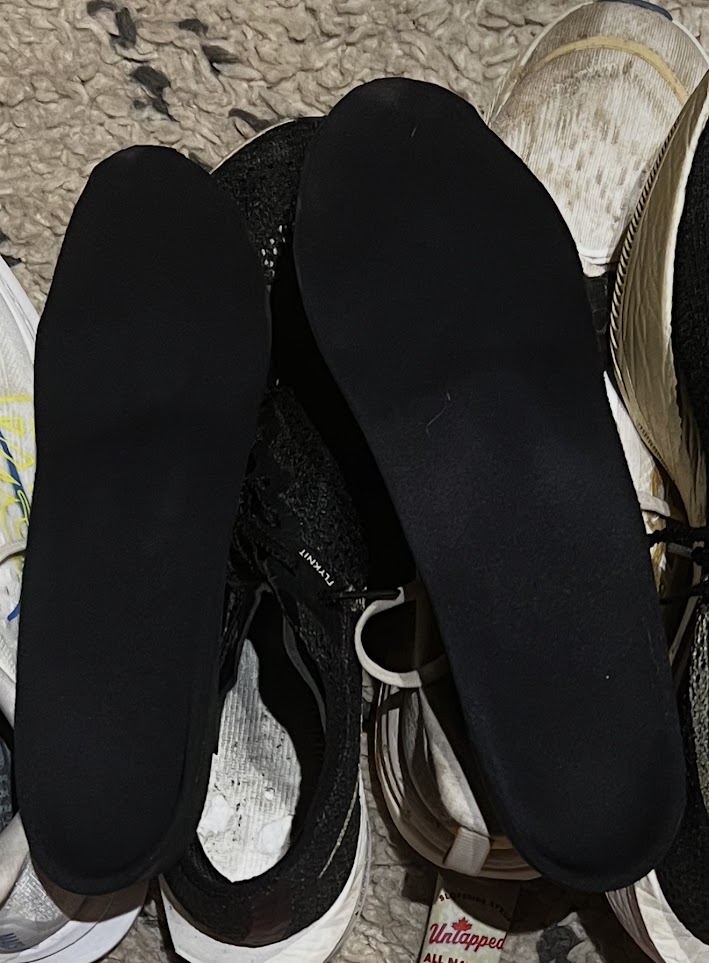
Currex insoles are my favorite over-the-counter option. Nice arch support, low profile, easy to fit in just about any shoe, and the support isn’t completely rigid so your foot still has to work.
And if you suspect a structural issue like forefoot varus (or a good PT/podiatrist finds one), custom insoles are the real fix. Dr. Kirby made mine and they genuinely changed my life. He’s retiring soon, so you’ll likely need to find another biomechanics-focused podiatrist, but if you tell them your condition and what you’re dealing with, they should be able to help. In the meantime, Human Locomotion makes peel-and-stick forefoot and rearfoot varus posts that you can add to an insole yourself. It’s the DIY version of what my custom insoles do, and correcting that varus was one of the biggest pieces of my recovery.
4. Mobo Board
Standalone section because this deserves it. This might be the single most important thing you can do for this injury.
Weak, poorly controlled feet are usually the root cause here. Your tibialis posterior (the muscle pulling on that sore spot on your shin) is the victim, not the culprit. It’s being overworked trying to control a foot that can’t control itself. The Mobo Board trains your big toe control and teaches your foot to actually stabilize instead of folding under pressure.
When I had my stress fracture, two different physical therapists told me to get one. I eventually did, and nothing was more instrumental in getting me over that injury and strengthening my lower leg complex back up enough to run a lot of miles again. It was made by Jay Dicharry, one of the best running physical therapists in the country, and they have good follow-along videos on YouTube for all the exercises.
5. The Exercises
Jay Dicharry nailed this one. He wrote the best article out there on fixing shin splints through foot control, and it includes his exact exercise routine with photos: Toe Yoga, Single-Leg Shoulder Press, Tippy Twist, and Foot Screws. If you don’t have a Mobo Board yet, this routine is the best thing you can do. If you do have one, this routine plus the board is the full package.
The theme across everything: big toe strength. A stable big toe stabilizes your forefoot, which stabilizes your whole foot, which finally lets that shin muscle stop doing everyone else’s job.
6. Compression
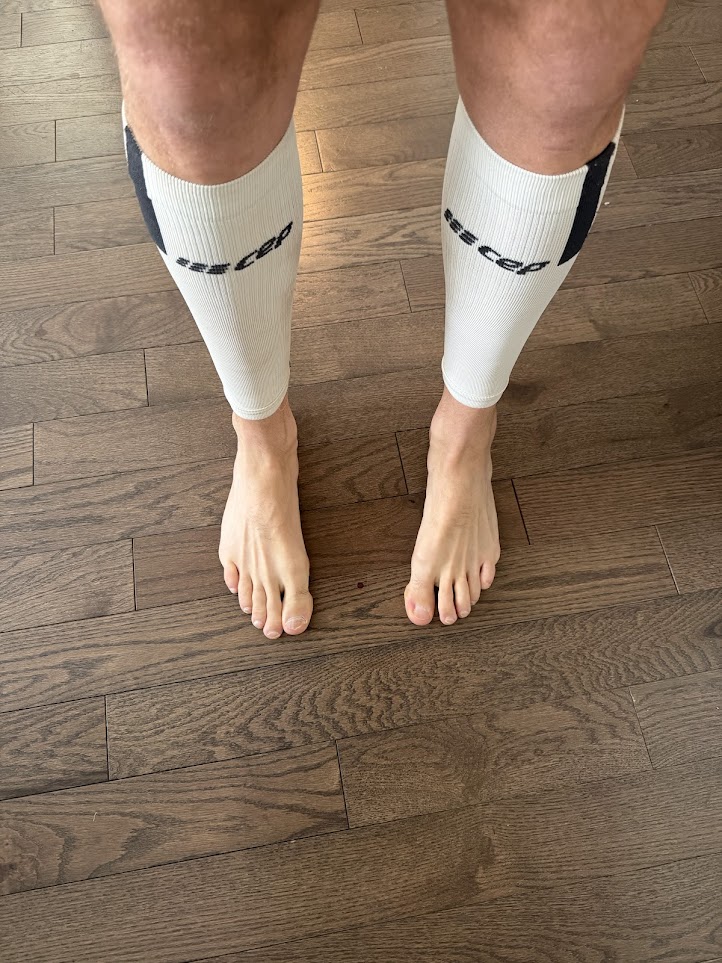
Wear compression sleeves as much as possible. CEP is my favorite brand in this space, and I prefer the calf sleeves over the socks for this injury since they cover the exact area that’s angry. Wear them during runs, after runs, around the house. It’s cheap, it’s passive, and it helps.
7. Elevation
Get it elevated whenever you can. Lie on your back, feet up on the wall, 2 to 3 times a day for 10 to 15 minutes. This isn’t just an early acute-phase thing, keep doing it throughout your entire recovery. It costs you nothing, helps calm inflammation, and honestly it feels great after a long day.
8. Pro-Level Help, Get a Real Diagnosis
If the pain is sharp, focal (you can point at it with one finger), hurts when you hop, or isn’t improving after a few weeks of doing everything above, go get an MRI. That’s the only way to know where you actually are on the irritation-to-fracture spectrum, and the answer changes everything about your timeline.
And same warning as my plantar guide: a lot of PTs will hand you some stretches, a $125 bill, and send you out the door with just as much shin pain as you walked in with. Ask runners who ACTUALLY got better who they went to.
9. Track It Like a Scientist
Spreadsheet it. Every day: how much you ran, what shoes, whether you did your exercises, whether you wore compression, pain level that day and the next day. Patterns will show up fast, and that’s where the answers are. The act of tracking alone builds the connection between what you do and how you feel, and keeps you consistent, which matters more than anything.
Here’s the same tracking spreadsheet from my plantar guide to copy and use:
https://docs.google.com/spreadsheets/d/1HU17I7Wxln8jjDHPqtnje4zz9q01asymsRc3IlsjsOA/edit?usp=sharing
The Truth
This takes time. Bone and tendon stress doesn’t care about your race calendar. Some people calm it down in a few weeks. For others (hi, it’s me) it’s a months-long project. But rest alone rarely fixes it, because rest doesn’t fix the unstable foot that caused it.
Reduce load, fix the foot, and build back slowly. That’s the whole game.
Stay proactive. Keep chipping away. Don’t give up.
Quick Bonus Non-Negotiables
- Dial in your sleep. Bone healing happens when you sleep, period.
- Dial in your nutrition too, and get a blood test. Low vitamin D, low iron, or under-fueling in general will sabotage bone healing no matter how perfect the rest of your rehab is.
- Do not test it. No “let me see if it still hurts” tempo runs.
Further Reading
These are the resources I send to my own athletes, and they’re all excellent:
- Ramp Up Your Foot Control to Bring Down Your Shin Pain (Outside Online)
- How to Fix Shin Splints by Jay Dicharry (None to Run)
- Injury Series: Medial Tibial Stress Syndrome (Running Writings, the deep dive)
- This video breakdown of MTSS
- Dr. Kevin Kirby’s Facebook page for biomechanics and orthotics knowledge